Why Japan has labour shortages even when growth feels slow
Japan’s labour shortage is not one vacancy problem. It is the meeting point of demography, sector mismatch, regional decline, and a work culture being forced to adapt.

Japan’s labour shortage is easy to misread because it appears alongside a slow-growth economy. If the economy is not booming, why are employers struggling to hire? The answer is that the number and location of available workers can matter more than the speed of aggregate growth.
Demography moves before the business cycle
Japan’s working-age population has been under pressure for years. A smaller cohort entering the labour market means that replacing a retiring worker is not a temporary recruitment challenge. It is a structural change in the supply of labour.
The effect is uneven. Large employers in Tokyo may still attract applicants, while a care home, logistics company, hotel, or construction firm outside the major metropolitan areas faces a much narrower pool. “Japan has jobs” and “this employer can fill this shift” are different statements.
The mismatch is about jobs, not only people
Many shortages are concentrated in work that is physically demanding, geographically fixed, socially essential, or difficult to schedule around family life. Care and transport are obvious examples. A young worker who lives in a large city cannot easily fill a vacancy in a rural care facility, even if the country has people who need the service.
Pay matters, but it is not the entire solution. Better wages can draw people into a sector; better training, predictable schedules, safer workplaces, and a credible path to progression can determine whether they stay. A shortage is often a signal that the job has been designed around a worker who no longer exists in sufficient numbers.
The adaptation stack
Japan is responding through several channels at once: higher participation among women and older workers, more international recruitment, investment in labour-saving equipment, and experiments with new work patterns. Each channel has limits. Participation cannot rise forever, immigration requires institutional support, and automation only helps when the underlying process is clear enough to redesign.
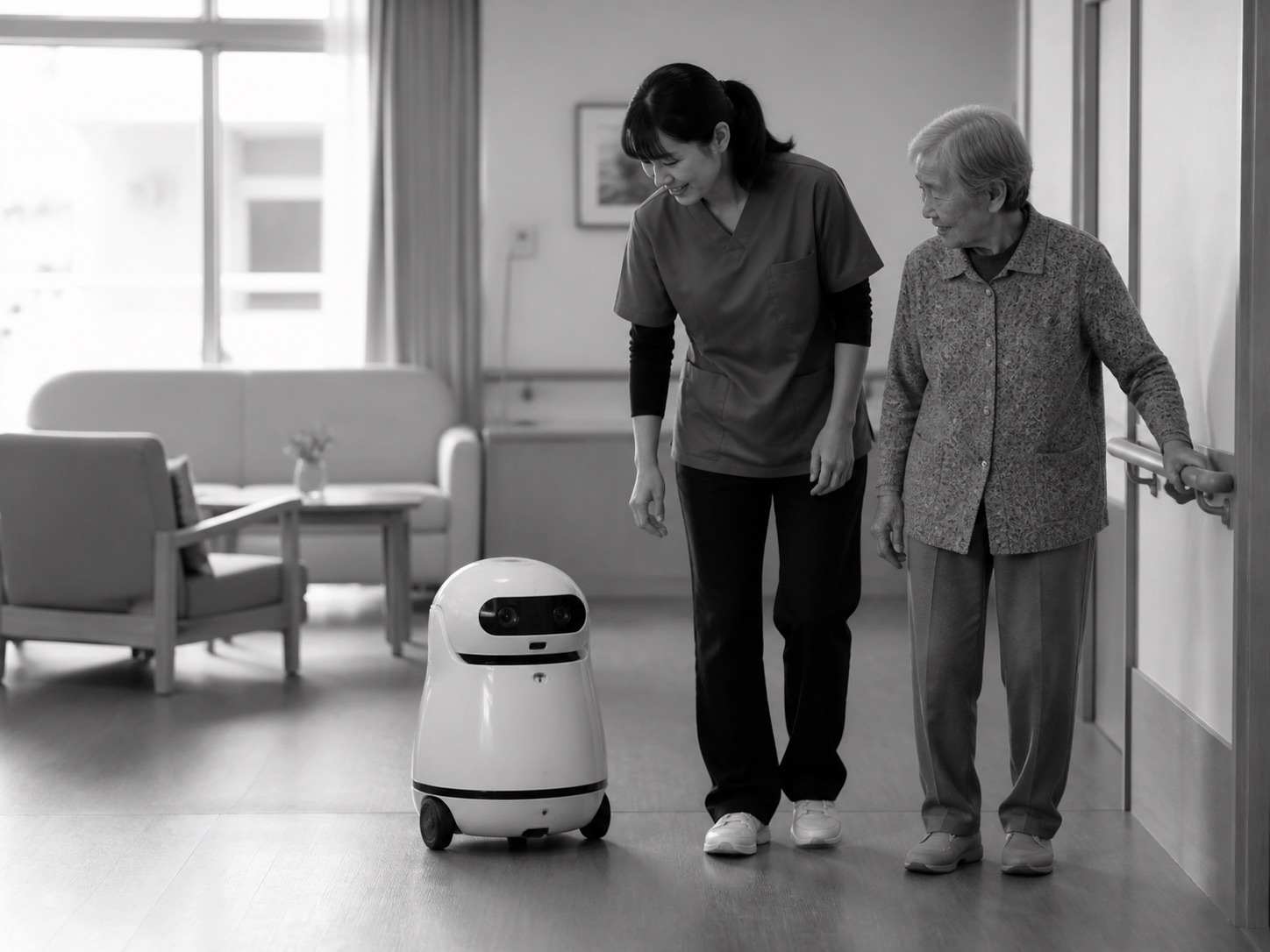
This is why robotics and AI should be judged as labour infrastructure rather than magic substitutes. A system that removes paperwork from a nurse’s day can expand effective capacity. A system that adds monitoring screens without changing the workflow can create more work.
The deeper question
The shortage forces a choice about what Japan wants to preserve. If every service must remain available in every place at its current labour intensity, the cost will rise. If a region cannot sustain a service, it may need consolidation, transport, remote support, or a new model of care.
Japan’s labour story is therefore not simply a warning about fewer workers. It is a design problem: which work is essential, who should do it, what technology can remove, and what society is willing to pay for the rest.
Sources & methodology
The sources below anchor the explanation. They are starting points for verification, not decoration.
- 01 Statistics Bureau of Japan — Labour Force Survey
Official labour-market data on employment, unemployment, participation, and industry patterns.
- 02 Ministry of Health, Labour and Welfare — Labour Policy
Primary material on employment policy, working conditions, training, and demographic pressure.
- 03 OECD — Employment and labour markets
Comparative context for participation, productivity, skills, and the changing shape of work.