Why Taiwan became central to advanced chips
Taiwan’s semiconductor position is not just a story about one company. It is a dense system of engineering talent, suppliers, infrastructure, customers, and accumulated trust.
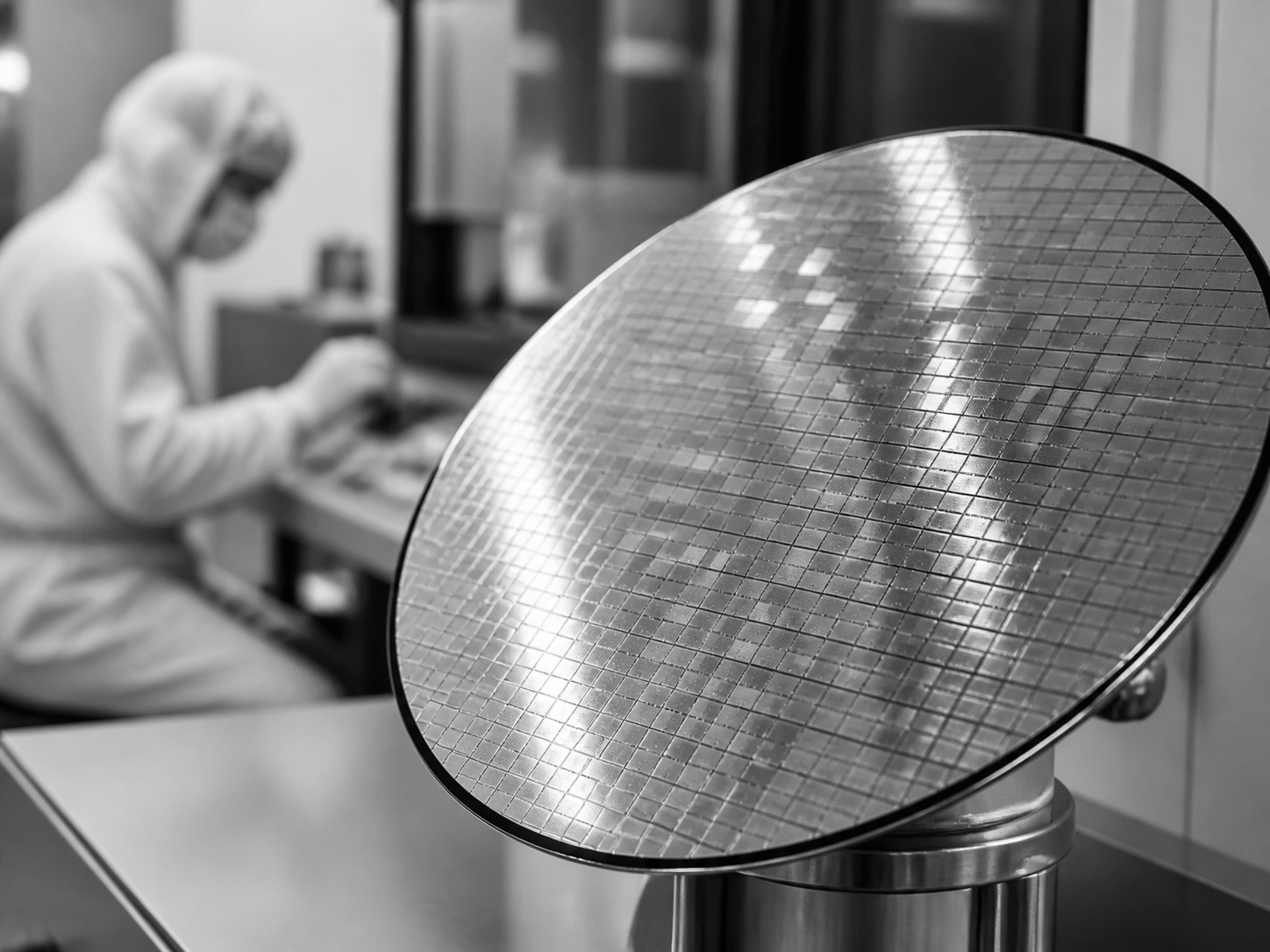
When people say Taiwan “makes the world’s chips”, they compress several different activities into one sentence. The more useful explanation is that Taiwan became exceptionally good at a particular part of the chain: manufacturing chips designed by other companies, at enormous scale and with demanding process requirements.
The foundry bargain
Traditional integrated device makers designed and manufactured their own chips. The dedicated foundry model separated those jobs. A customer could focus on architecture and product design while a manufacturing partner invested in fabrication plants, process technology, yield improvement, and production discipline.
That separation created a positive loop. More customers made the foundry’s process learning more valuable. More process capability attracted customers that needed leading performance. The model also reduced the risk that a chip designer would have to own a factory before it had enough volume to use one efficiently.
Clusters compound
Factories are visible; the surrounding system is less so. A leading semiconductor cluster depends on equipment maintenance, specialty chemicals, packaging, testing, logistics, clean-room construction, university research, and engineers who can move between companies without leaving the region.
Time matters because the knowledge is partly tacit. A process can be documented and still be difficult to reproduce. Teams learn how to solve yield problems, qualify suppliers, schedule capacity, and communicate with demanding customers. Those routines become a form of infrastructure.
Trust is a production asset
Chip manufacturing is capital-intensive and schedules are unforgiving. Customers need confidence that sensitive designs will be handled carefully, capacity will be available, and process changes will be communicated. Trust lowers coordination cost. It is one reason a company may stay with a partner even when another location offers a short-term subsidy.
This does not mean Taiwan is insulated from risk. The industry is exposed to geopolitical pressure, energy and water requirements, export controls, talent competition, and the fragility of a supply chain that crosses many borders. Concentration creates efficiency and vulnerability at the same time.
The lesson beyond chips
Taiwan’s semiconductor story is often used as a case for industrial policy, but policy alone does not manufacture a cluster. The durable advantage comes from policy interacting with firms, universities, infrastructure, and a labour market that can keep learning.
The question for other economies is not “how do we build a copy of Taiwan?” It is “which part of a valuable production system can we become unusually reliable at—and what relationships would make that advantage compound?”
Sources & methodology
The sources below anchor the explanation. They are starting points for verification, not decoration.
- 01 TSMC — About TSMC
The company’s own explanation of the dedicated foundry model and its role in the semiconductor industry.
- 02 Taiwan Ministry of Economic Affairs
Official context for Taiwan’s industrial policy, manufacturing base, and economic structure.
- 03 Semiconductor Industry Association — Factbook
Industry-wide context for the global semiconductor value chain and its geographic concentration.